
WinSpirit withdrawal time, KYC and cashout tracking
 Available in US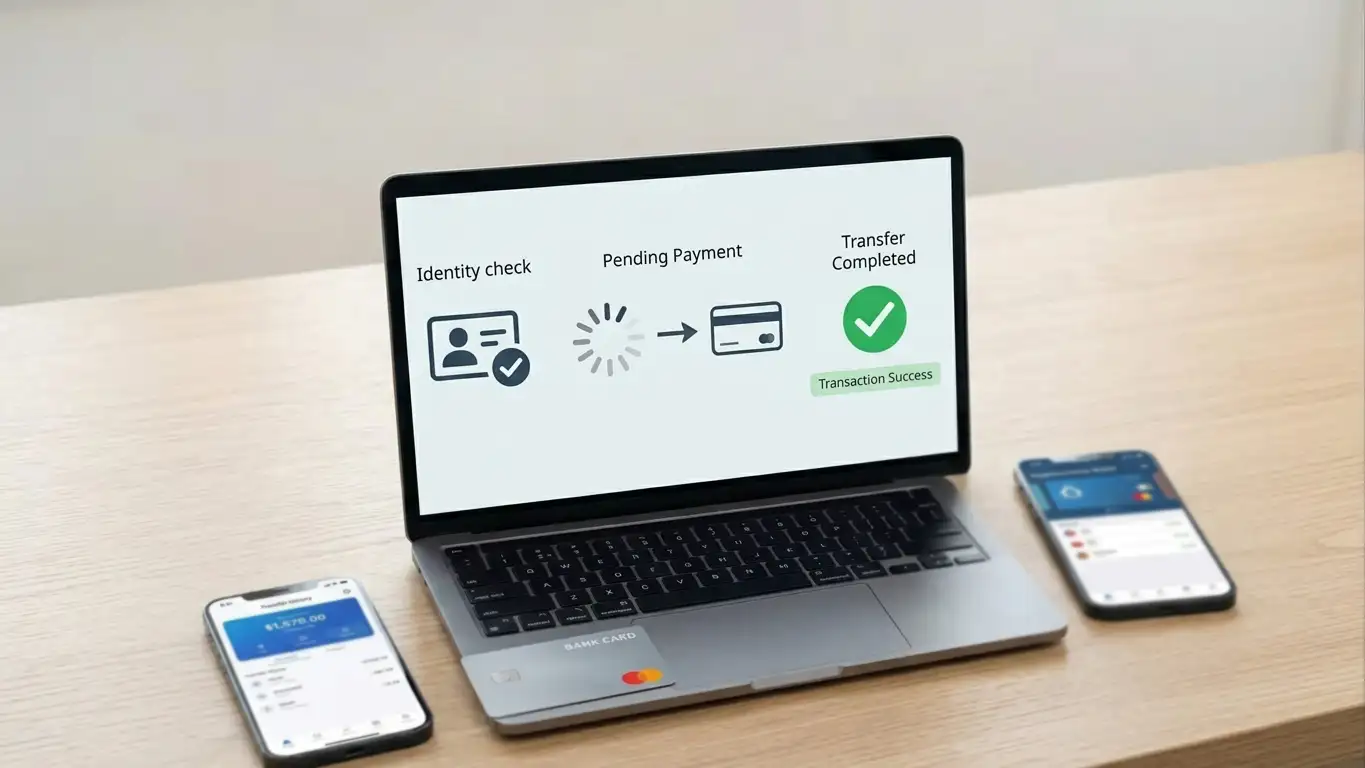
WinSpirit withdrawals are easiest to understand as a sequence rather than one timer. Identity checks can happen before cashout, the request can spend time in an internal pending stage, and the final bank, card, e-wallet or crypto rail can add its own transport time. Timing windows cover those stages, while the monthly cap figures appear in two different currencies. The practical job is to keep each checkpoint separate so a delay can be located without turning one case or one timing figure into a platform-wide promise.
Complaint cases are useful when they stay individual
A 2026 Australian complaint in Casino Guru involved an A$2,500 WinSpirit withdrawal. The player described a delayed cashout, and the case was later closed after the player stopped responding. Because the case ended without a final player update, it cannot stand in for the outcome of other withdrawals. Its value is narrower: it shows why a cashout record should preserve dates, status changes, support messages and the payment route instead of relying on memory after several days.
The wider complaint picture is mixed rather than uniform. AskGamblers’ complaint archive includes both resolved or management-favoured cases and unresolved withdrawal disputes. That combination matters because complaint records are case files, not an average withdrawal-time statistic. One resolved dispute does not prove that every payment is fast, and one unresolved dispute does not prove that every withdrawal will fail.
- Case amount: note the exact requested withdrawal amount and currency.
- Request time: preserve the date and time the cashout was submitted.
- Verification stage: record whether KYC was requested before or during processing.
- Support history: keep the channel, date and core response from each contact.
- Payment route: distinguish bank, card, e-wallet and crypto transport from the internal pending stage.
This is also why the broader WinSpirit payments guide should be read alongside individual withdrawal cases. The payment route changes what happens after internal processing, while the complaint file usually focuses on the user’s specific sequence rather than every stage of the underlying rail.
KYC sits inside the cashout path
Identity verification is part of WinSpirit’s account and withdrawal flow, and identification documents are required before withdrawal. The important consequence is that a cashout can depend on account review before the payment method becomes the relevant bottleneck. Treating verification and transport as separate stages makes a withdrawal easier to diagnose.
The account guide explains the KYC and support sequence in more detail. For withdrawal tracking, the useful distinction is simple: a request that is waiting for identity review has not yet reached the same stage as a processed crypto transfer or a bank payment moving through external rails.
- Check that the account details match the identity information used for verification.
- Submit the requested documents clearly and keep a copy of what was supplied.
- Record when the documents were sent and any response tied to that request.
- Only after the verification stage is complete should payment-rail timing be read as the next checkpoint.
This sequencing prevents a common tracking error: combining KYC time, internal pending time and payment delivery into one number. Each stage can have a different cause and a different next action. A precise timeline is more useful than repeatedly asking whether the whole withdrawal is “late” without identifying which stage is still open.
Monthly cap figures should remain separate
Two monthly withdrawal-cap figures appear: EUR 25,000 and USD 60,000. They should not be compressed into one “WinSpirit monthly limit” because the currencies and contexts differ. Keeping both numbers visible avoids implying that either figure is a universal account limit.
| Currency context | Monthly figure | How to interpret it |
|---|---|---|
| Euro-denominated figure | EUR 25,000 | Keep it separate from the US-dollar figure; it is not an Australian-specific promise or a universal cashier rule. |
| US-dollar-denominated figure | USD 60,000 | Keep it separate because its currency and context differ from the euro-denominated figure. |
The two cap figures are context-dependent. A user following a large withdrawal should keep the actual cashier amount, currency and any account-level instruction visible in the same record rather than treating a converted figure as the live limit for that account.
This distinction is especially important for mixed fiat and crypto platforms. Converting the EUR or USD figures into A$ or a crypto asset would create a new number that is not part of the stated cap data. The useful facts are the two monthly figures; the rest belongs to the live transaction context.
Timing windows map the stages of a withdrawal
AskGamblers lists 0–24 hours for the pending stage, 0–24 hours for e-wallet or crypto payouts and 3–7 days for bank or card payouts. These category-level windows are not a guarantee that a particular cashout will complete inside the same period.
| Stage or route | Timing window | What it describes | What to track separately |
|---|---|---|---|
| Internal pending | 0–24 hours | The period before the withdrawal moves beyond the platform’s pending stage. | KYC requests, support messages and any status change. |
| E-wallet or crypto | 0–24 hours | A category-level timing window after processing. | Wallet details, transaction reference and destination confirmation. |
| Bank or card | 3–7 days | A longer category-level window for conventional payment rails. | Bank/card processing status and the date the platform marked the cashout processed. |
The table becomes more useful when each timestamp has a label. “Requested at 10:00” is different from “documents supplied at 14:00,” “withdrawal marked processed the next day,” or “bank credit received three days later.” Without those labels, a single elapsed-time total hides the stage that actually consumed the time.
Crypto adds another distinction. A platform-side withdrawal can be complete while the destination transaction is still being checked on the relevant network, and irreversible transfers make address accuracy important before submission. Bank and card payments create a different handoff, where the receiving institution can have its own processing sequence. The rail changes the final leg, while KYC and the internal pending stage remain separate.
Risk records work better when they separate facts from assumptions
A useful withdrawal record contains observable events: request time, amount, currency, KYC request, document submission, status changes, support contacts, processing notice and payment reference. It should avoid filling gaps with assumptions about why a stage is taking longer. The same event can have several possible explanations, and support is more likely to resolve a precise question than a guessed cause.
For example, “withdrawal pending for 18 hours” is a measurable state. “The bank is holding it” is not the same statement unless the withdrawal has already left the platform and the bank has identified the transfer. Likewise, a crypto address or transaction hash belongs to the payment leg, not to the earlier KYC stage.
- Internal event: withdrawal requested, pending, processed or cancelled.
- Verification event: document requested, submitted or reviewed.
- Support event: chat or email response with the next instruction.
- Transport event: bank/card movement or crypto transaction reference.
- Outcome event: funds received, request reversed or dispute moved to another step.
This framework also improves complaint interpretation. A complaint that ends after the player stops responding has a different evidentiary value from a case that records a completed payment, a rejected claim or a continuing dispute. The record should preserve that distinction rather than forcing every case into a simple “paid” or “not paid” label.
A cashout sequence is easier to follow with six checkpoints
The withdrawal process can be reduced to six practical checkpoints. This does not predict how long an individual request will take; it simply creates a consistent way to identify where the request currently sits and what evidence belongs to that stage.
| Checkpoint | Question to answer | Record to keep |
|---|---|---|
| 1. Request | When and for how much was the withdrawal submitted? | Amount, currency, request timestamp. |
| 2. KYC | Was identity documentation requested before cashout? | Document category, submission time, response. |
| 3. Pending | Is the request still in the platform’s internal queue? | Status wording and time of each change. |
| 4. Processed | Has the platform marked the withdrawal as sent or processed? | Processing notice and any reference supplied. |
| 5. Transport | Which payment rail is carrying the funds? | Bank/card reference, e-wallet status or crypto transaction reference. |
| 6. Outcome | Were the funds received, returned or moved into a dispute? | Receipt time or the next support/dispute step. |
The sequence also helps keep the monthly cap figures in perspective. A monthly cap figure answers a different question from a timing window. Neither tells you whether KYC is complete, whether a bank transfer has reached the receiving institution or whether a complaint case will match another user’s outcome. Separating those questions produces a cleaner cashout record and more focused support conversations.
For a broader view of WinSpirit’s payment rails, including fiat and crypto options and the role of AUD, return to the payments overview. For KYC, support channels and account controls, use the account section.
Questions about WinSpirit withdrawals
How long can a WinSpirit withdrawal take?
Timing windows are 0–24 hours pending, 0–24 hours for e-wallet or crypto payouts, and 3–7 days for bank or card payouts. They are not a guarantee for an individual withdrawal.Is KYC required before a WinSpirit withdrawal?
Yes. Identity verification is part of the account and withdrawal flow, and identification documents are required before withdrawal.What monthly withdrawal cap does WinSpirit use?
The two monthly figures are EUR 25,000 and USD 60,000. Because the currencies and contexts differ, they should remain separate rather than be combined into one cap.Do individual complaints define WinSpirit’s usual withdrawal outcome?
No. Individual complaint cases describe specific disputes and outcomes, so they should be read as case evidence rather than a platform-wide rule.
Cashout is easiest to track when every stage has its own record
WinSpirit withdrawal timing is not one clock. KYC, internal pending time and the final bank, card, e-wallet or crypto route are separate stages, while the EUR 25,000 and USD 60,000 monthly figures remain separate rather than forming one universal limit. The most useful approach is to record each checkpoint, keep complaint cases in their individual context and compare the current request with the stage it has actually reached.
Read next